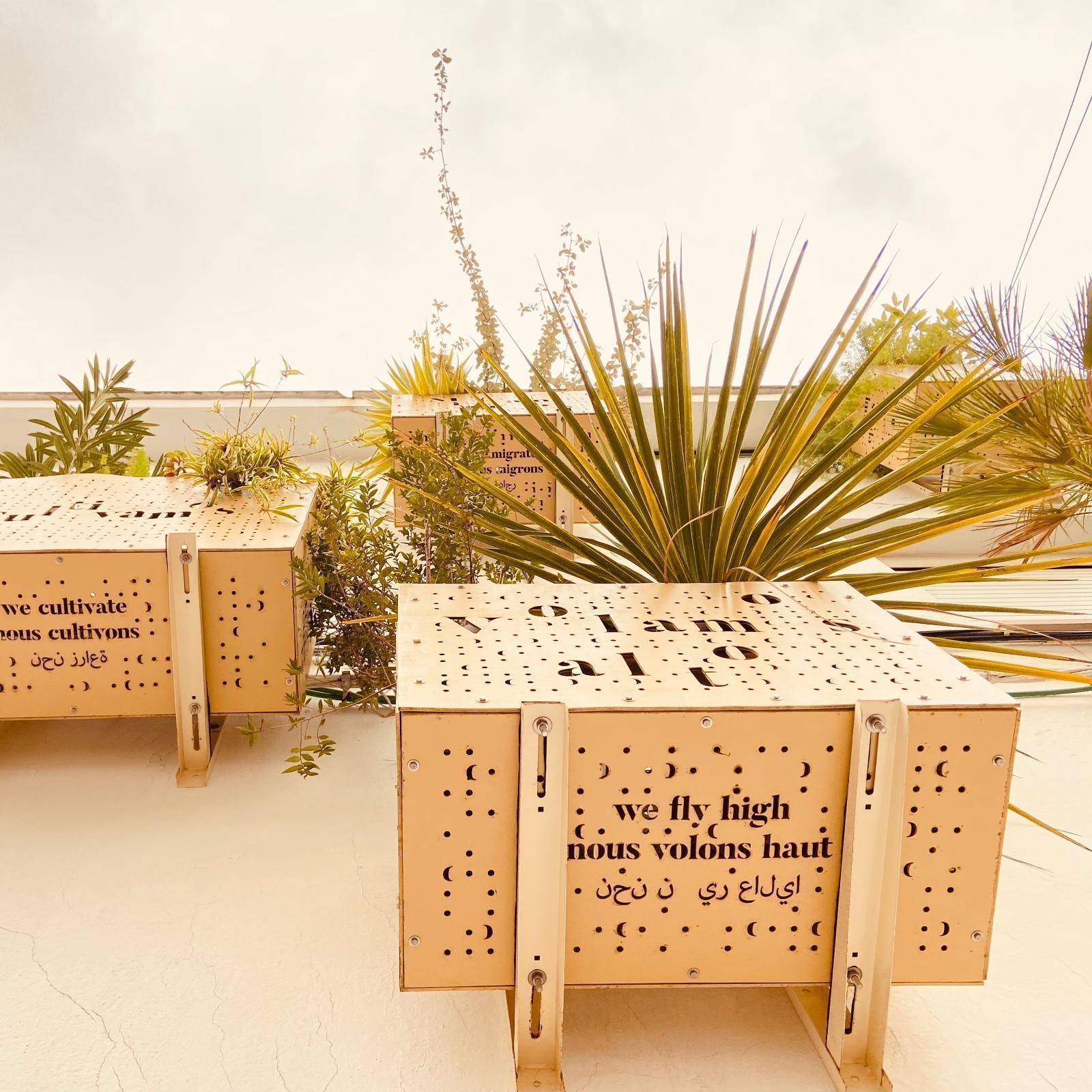
1. Aires / Air conditioning
Esta historia arranca en el año 2021… cuando decidimos hacer algo muy simple pero poderoso: cultivar un jardín en la fachada de la asociación AES Candelaria.
Como no teníamos tierra, ni espacio, ni riego… nos las ingeniamos. Fabricamos veinte jardineras reutilizando los soportes de los aires acondicionados. Pero eso no fue lo más curioso…
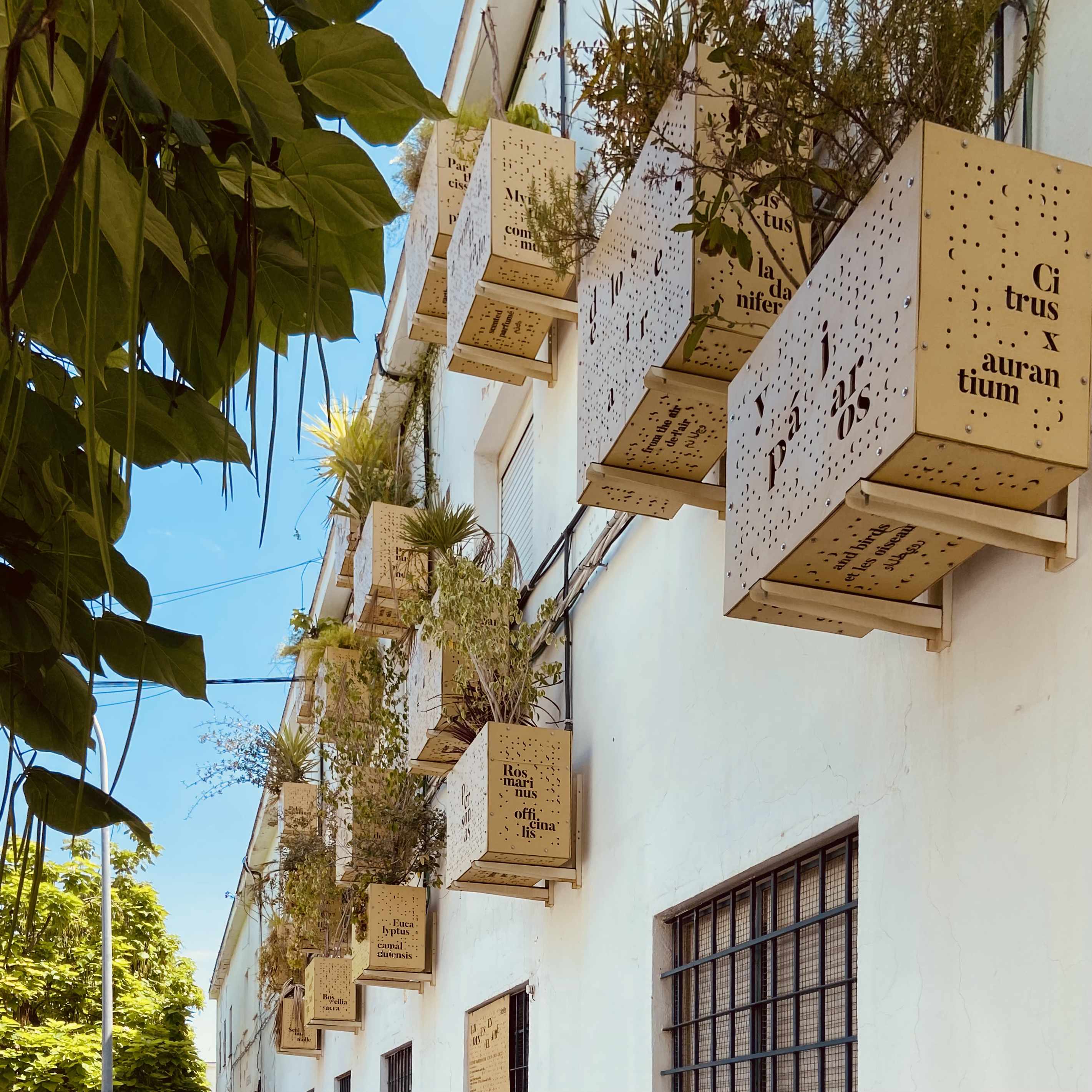
No, lo más singular fue el agua. Sí, el agua que sueltan los aires acondicionados. ¿Sabías que cada uno puede generar entre 1 y 2 litros por hora? Lo suficiente para formar charcos sobre las aceras…
Exactamente. Se trata de un agua que se forma en el interior de los aparatos, cuando el aire se condensa en los serpentines. Su composición es similar a la del agua de lluvia: un poquito ácida, sin cloro, pero también sin nutrientes.
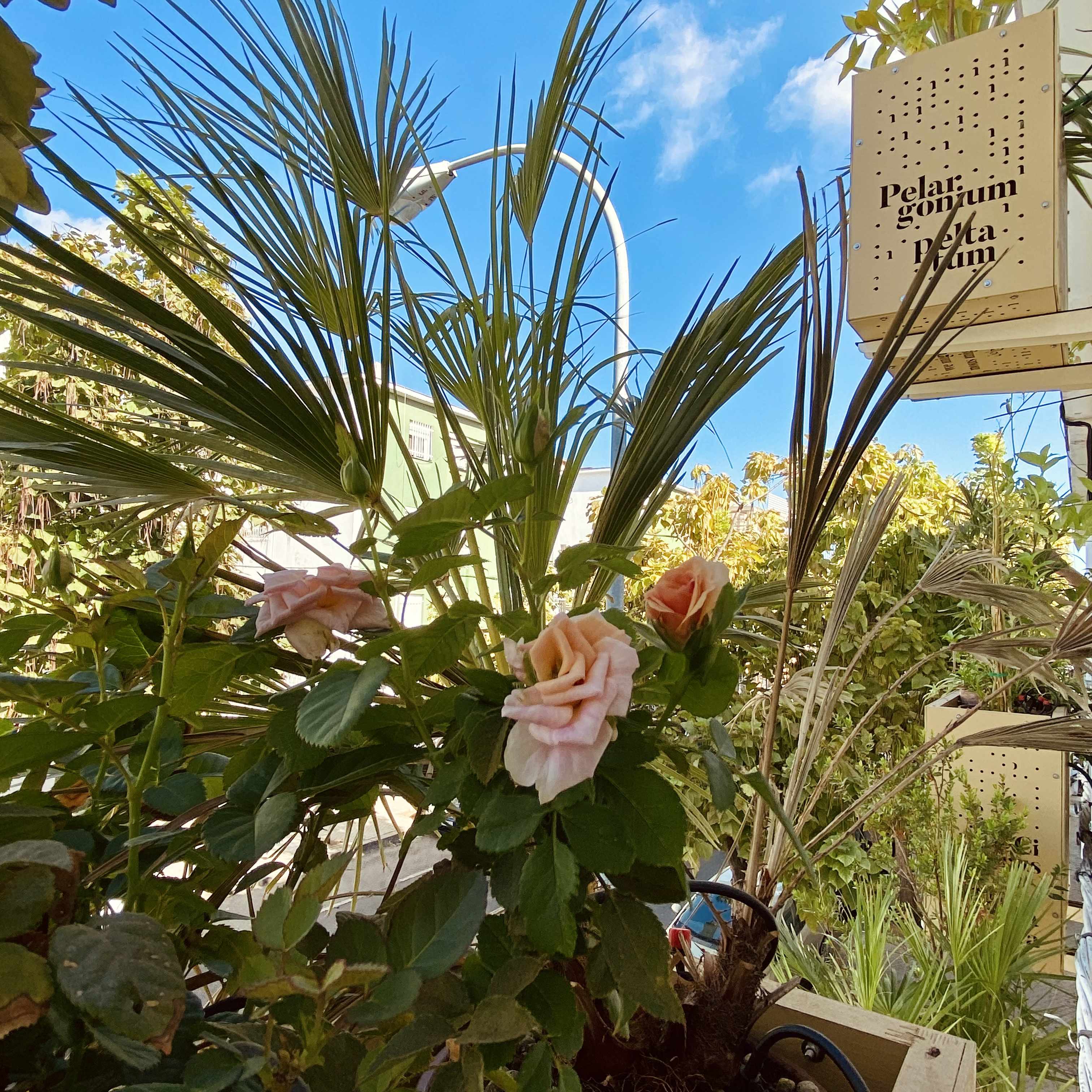
Así que el jardín se fue poblando inicialmente de plantas acidófilas -que les gusta esas condiciones- como clivias, helechos o rosas.
Pero hace poco, nos propusimos otro reto: ¿Y si ese jardín pudiera convertirse en un huerto comestible?
Claro, porque estamos formando un grupo de cultivo urbano. Y si queremos hortalizas, necesitamos un suelo rico y sano… y eso no se consigue con fertilizantes artificiales.
¿Y por qué no?
Pues porque su producción genera contaminación, emite gases de efecto invernadero y, lo peor, desequilibra los suelos, mata microorganismos, contamina acuíferos y rompe el ciclo natural.
Así que dijimos: “Ya que reciclamos el agua, por qué no reciclar nuestra basura orgánica”. Desde entonces, prestamos más atención a nuestros desayunos y meriendas para compostar los restos orgánicos sobrantes que son el ingrediente para producir humus y crear suelo fértil con ayuda de las lombrices…
Para los que no lo sepáis, el humus es un material valioso y nutritivo. El oro negro lo llaman algunos. Y cómo producimos más de lo que necesitamos para fertilizar, hemos explorado cómo utilizarlo como material de construcción…
Pero eso lo dejamos ya para los próximos episodios, donde hablaremos de nuestras experiencias, errores, hallazgos, y sobre todo de lombrices.
¡Hasta la próxima!
*** English version ***
This story starts in the year 2021... when together with AES Candelaria, we decided to do something very simple but powerful: to grow a garden on the façade of the association.
And as we had no soil, no space, no irrigation... we managed to do it. We made 20 planters by reusing the supports of the air conditioners. But that wasn't the most curious thing...
No, the most unique thing was the water.
Yes, the water condensed by air conditioners. Did you know that each air conditioner can generate between 1 and 2 litres per hour?
Enough to form puddles on pavements...
Exactly. This is water that forms inside the air conditioners when air condenses on the coils. Its composition is similar to that of rainwater: slightly acidic, without chlorine, but also without nutrients.
So the garden was initially populated with acidophilic plants -which like these conditions- such as clivias, laurels, ferns or kalanchoes.
But recently, we set ourselves another challenge: What if this garden could be turned into an edible vegetable garden?
A vegetable garden in pots! But we need rich, healthy soil... and of course, you can't get that with artificial fertilisers.
And why not?
Because its production generates pollution, emits greenhouse gases and, worst of all, unbalances the soil, killing micro-organisms, contaminating aquifers and breaking the natural cycle.
So we thought: "Since we recycle water, why not recycle our organic waste?” Since then, we pay more attention to what we eat to compost our leftovers to produce humus and create fertile soil with the help of earthworms...
For those of you who don't know, humus is a valuable and nutritious material.
Some call it black gold.
And since we produce even more than we need to fertilise, we are exploring how to use it as a building material...
But we will leave that for the next episodes, where we will talk about our experiences, mistakes, findings, and above all about worms.
See you soon!
 Powered by