
4. Vermicomposteras / Vermicomposters
Hoy vamos a hablar de las vermicomposteras domésticas. Suena muy técnico, pero es más sencillo de lo que parece.
Sí, básicamente son artefactos que sirven para criar lombrices (como la Eisenia foetida) y transformar los restos de comida en humus, ese oro negro del suelo.
¿Y cómo son esos dispositivos?
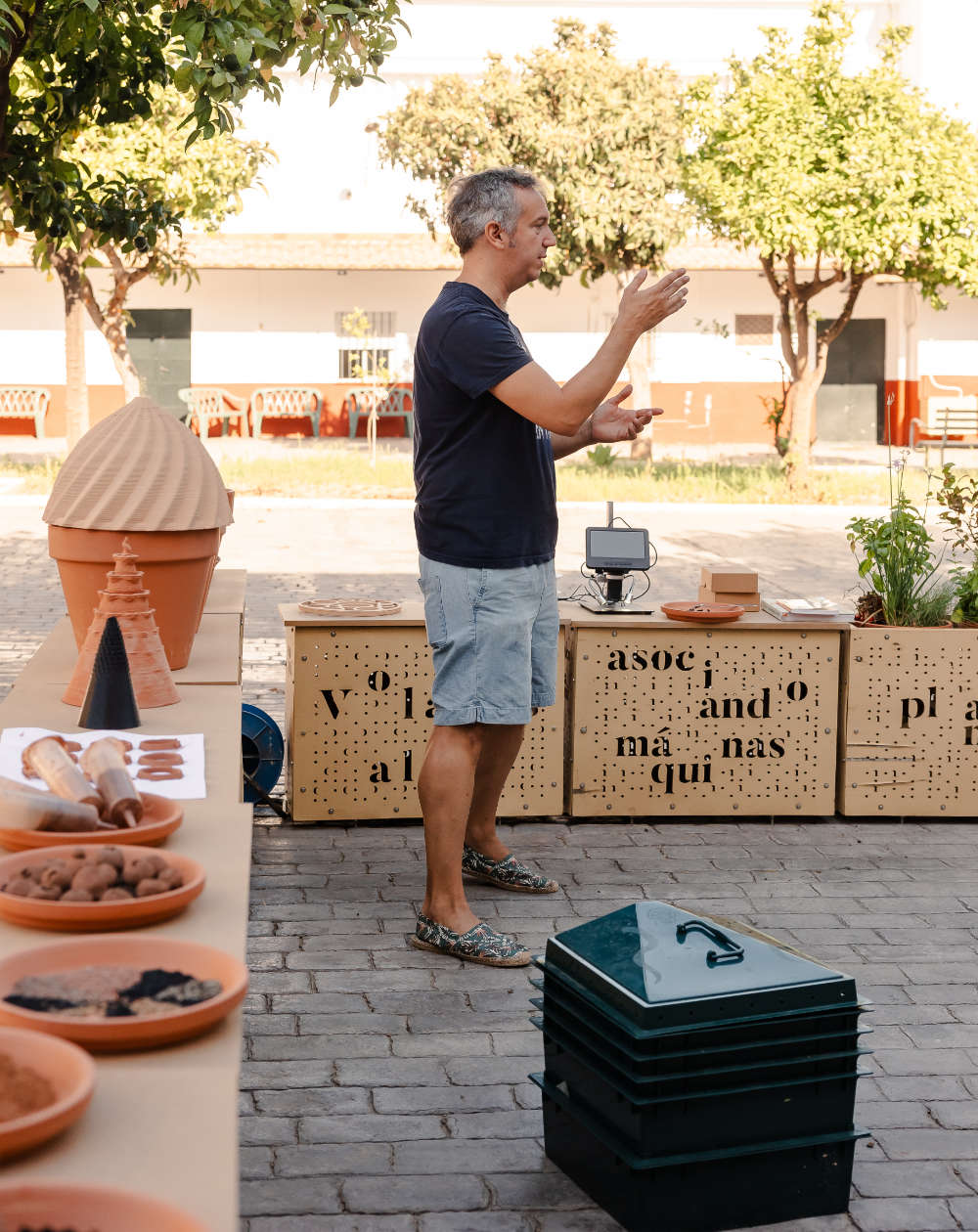
Imaginemos una caja o una torre con pisos. Algunos modelos separan incluso el humus sólido del líquido, que se llama lixiviado. Para una familia pequeña es suficiente una compostera de entre 15 y 50 litros. Nosotros estamos probando con una de 15 l y con otra de 100 l.
¡Vamos, ideal para patios, balcones o fachadas! Pero ojo con la forma: no es tan importante que sean altas, como que tenga buena superficie y poca profundidad. Porque a las lombrices les gusta moverse en capas delgadas, no en pozos.
Exactamente, imaginaros que en una compostera pequeña pueden vivir entre 500 y 1.000 lombrices. Aunque lo ideal es empezar con menos, y dejar que ellas se vayan multiplicando solas hasta encontrar un equilibrio.


¿Y los olores? Porque esa es una preocupación común...
En principio, no debe oler mal si está bien manejada. Pero si huele raro, puede ser por exceso de humedad o falta de oxígeno. Nada que no se pueda ajustar colocando trozos pequeños de cartón entre los restos orgánicos.
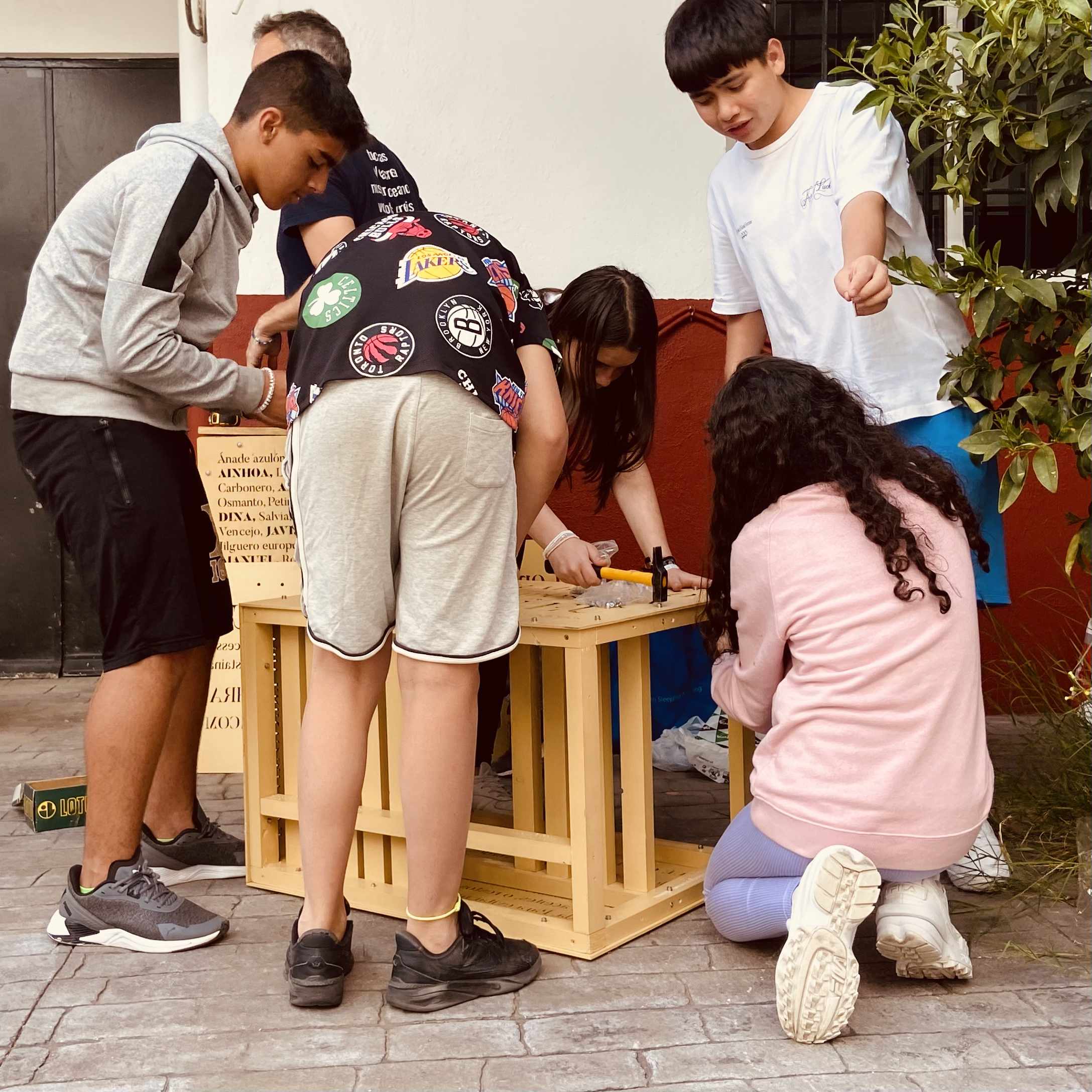
Ahora bien, ¿Cómo están construidas? pues bien, las hay de todo tipo. Nosotros hicimos un primer prototipo en madera, y luego otro en plástico. La clave es que tengan buena ventilación y drenaje, así como acceso fácil para sacar el humus.
Y si llega una ola de calor, ¡Cuidado! Si pasa de los 30 °C, hay que refrigerar, moverla a la sombra, mantenerla húmeda y reducir la comida.
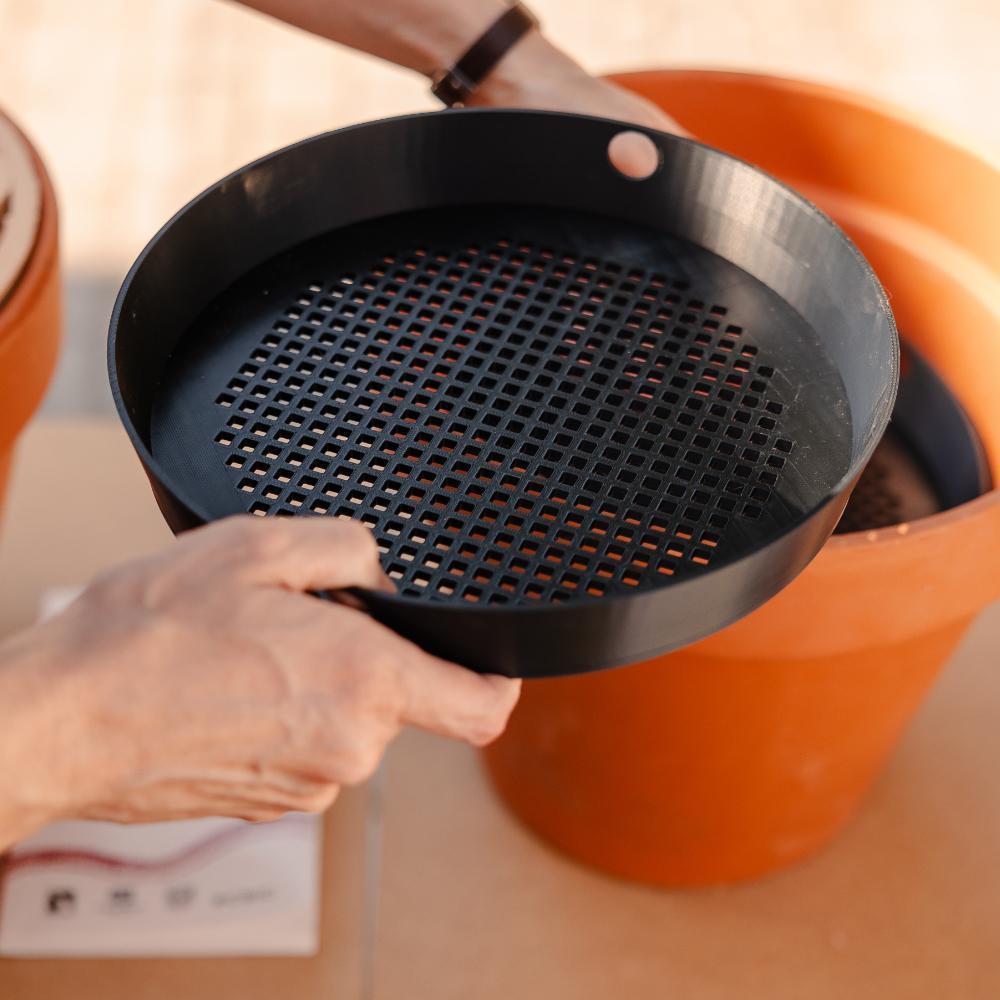
Es por esto mismo que estamos probando diferentes estrategias de aclimatación, como trasladarlas a lugares más frescos o intentar refrescarlas. Por eso hemos hecho un tercer prototipo en arcilla hackeando una maceta típica con una tapa impresa en 3D, que distribuye el agua que le cae de los aires acondicionados para mantenerla fresca por evapotranspiración.
_RGyVo26.jpeg)
.jpeg)
Vamos, que utiliza el efecto botijo de la cerámica cocida para crear un pequeño oasis para lombrices.
Exactamente. Así no habrá que reducir la comida. En el próximo episodio os contamos, precisamente, cómo alimentar bien a nuestras compañeras.
***English version***
Today we are going to talk about domestic vermicomposting devices... it sounds very technical, but it is simpler than it seems.
Yes, basically they are devices used to breed earthworms (such as Eisenia fetida) and transform food scraps into humus, that black gold in the soil.
And what do these devices look like?
Imagine a box or a tower with floors. Some models even separate the solid humus from the liquid, which is called leachate. For a small family, a 15 to 50-litre compost bin will do the trick. We are trying out a 15 litre and a 100 litre one.
Come on, ideal for patios, balconies or facades! But be careful with the shape: it is not so important that they are tall, but that they have a good surface and a shallow depth. Because earthworms like to move in thin layers, not in pits.
Exactly, imagine that in a small compost bin can live between 500 and 1.000 worms. Although the ideal is to start with less, and let them multiply on their own until they find a balance.
And the smells? Because that is a common concern...
In principle, it shouldn't smell bad if it is well managed. But if it smells strange, it may be due to excess humidity or lack of oxygen. Nothing that can't be adjusted by placing small pieces of cardboard between the organic remains.
Now, how are they built? Well, they come in all kinds. We made a first prototype in wood, and then another in plastic. The key is that they have good ventilation and drainage, as well as easy access to remove the humus.
And if a heat wave comes, watch out! If it gets above 30°C, cool it down, move it to the shade, keep it moist and reduce the food.
This is why we are trying different acclimatisation strategies, such as moving them to cooler places or trying to cool them down. That is why we have made a third prototype in clay by hacking a typical pot with a 3D printed lid, which distributes the water that falls on it from the air conditioners to keep it cool by evapotranspiration.
In other words, it uses the botijo effect of fired ceramics to create a small oasis for earthworms.
Exactly. So you don't have to cut down on food.
In the next episode we will tell you precisely how to feed our companions well.
 Powered by