
6. Humus
En el capítulo anterior hablábamos de todo lo que puede producir una pequeña vermicompostera doméstica… ¿Os acordáis?
Una vermicompostera de 15 litros podría generar hasta 10 litros de humus al año, y si nos vamos a una de 100 litros, la producción puede llegar a los 60 litros. ¡Una barbaridad para un sistema tan pequeño!
Eso nos deja con una pregunta muy lógica… ¿Qué hacemos con todo ese humus?
Si queremos utilizarlo para cultivar hortalizas en macetas, como tomates, lechugas o rabanitos, lo mejor es no usar el humus puro. Lo ideal es mezclarlo, y que represente entre un 20 y un 30 % del volumen total del sustrato donde vayamos a cultivar.
Sin embargo, si utilizamos las macetas como un huerto y realizamos una cosecha tras otra, mucha gente se preguntará: ¿cada cuánto hay que volver a fertilizar?
Pues depende un poco de lo que cultives, pero en general basta con añadir humus al principio de cada temporada. Por ejemplo, si haces dos siembras al año por maceta, con medio litro a un litro por maceta cada vez es suficiente.
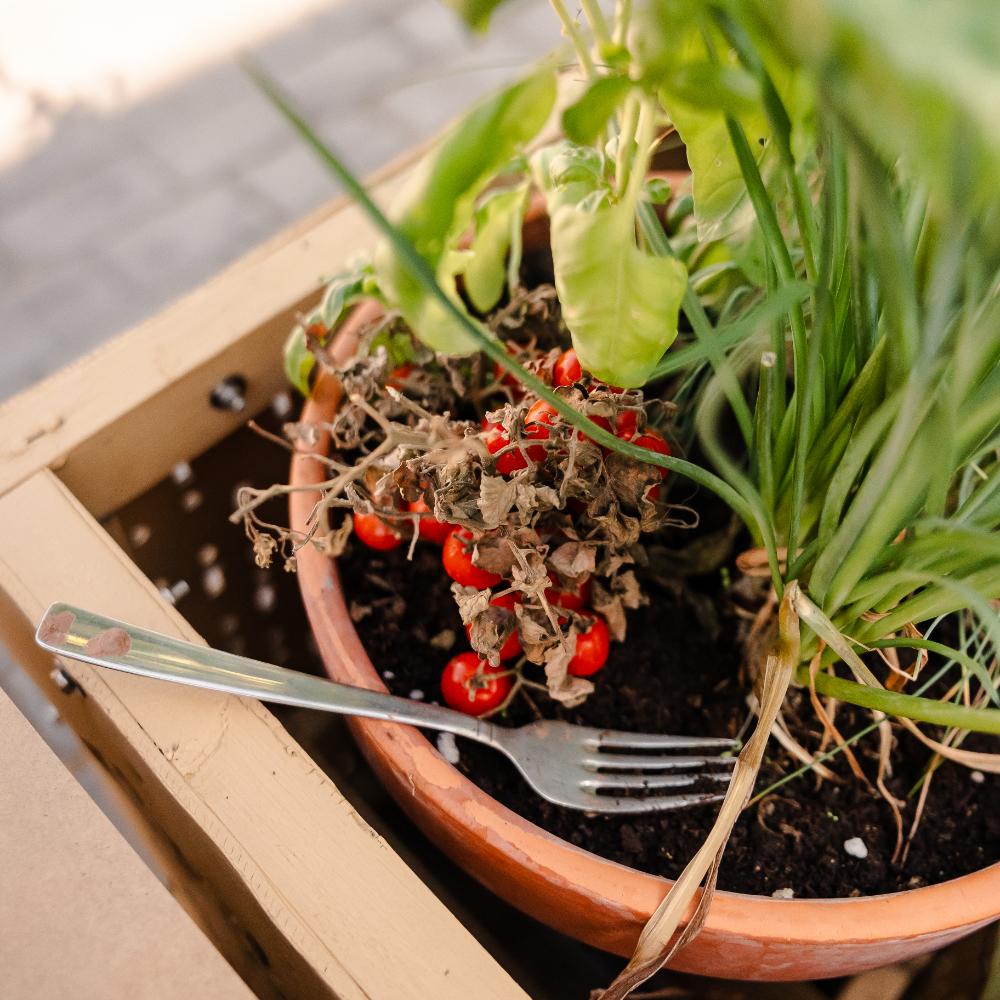
Exacto. Lo puedes aplicar como mulch, por encima, o mezclado ligeramente con el sustrato. El humus no solo nutre la planta, también mejora la tierra: retiene humedad y activa la vida microbiana… ¡es oro negro, vamos!
Así que, si calculamos bien, podríamos fertilizar de forma sostenible entre 10 o 20 macetas con una vermicompostera casera como la nuestra. Y más de 130 si añadimos nuestra compostera de 100 litros.
.jpeg)
¡Más macetas de las que tenemos ahora mismo en el jardín!
Exacto, eso quiere decir que nos sobra humus. Pero no hay que preocuparse, en Sevilla hay huertos urbanos ecológicos —como el de la UPO, donde tenemos una parcela— que aceptan donaciones y a cambio te dan plantones, semillas, asesoramiento… ¡o hasta parte de la cosecha!
Así que, con una vermicompostera bien cuidada, no solo nutres tu jardín, también puedes tejer redes con tu barrio o con los huertos urbanos vecinos. Porque al final, al compostar no solo alimentas la tierra, sino también las relaciones y la imaginación.

Y hablando de imaginación… En el próximo episodio exploramos cómo podemos utilizar ese humus como biomaterial de construcción.
***English version***
In the previous chapter we talked about what a small domestic vermicomposter can produce... Do you remember?
Yes, I do. A 15-litre one could generate up to 10 litres of humus per year, and if we go to a 100-litre one, the production can reach 60 litres. An enormous amount for such a small system!
And of course, that leaves us with a very logical question... What do we do with all that humus?
If we want to use it to grow vegetables in pots, such as tomatoes, lettuce or radishes, it is best not to use pure humus. The ideal is to mix it, and that it represents between 20 and 30% of the total volume of the substrate where they are going to grow.
However, if we use the pots as a vegetable garden and harvest one crop after the other, many people will ask: how often do we have to fertilise again?
Well, it depends a bit on what you are growing, but generally adding humus at the beginning of each season is enough. For example, if you have two sowings a year per pot, half a litre per pot each time is enough.
Exactly. You can apply it as a mulch, on top, or mixed lightly with the substrate. Humus not only nourishes the plant, it also improves the soil, helps retain moisture, dampens the pH and activates microbial life... it's black gold, come on!
So, if we calculate well, we could sustainably fertilise between 10 and 20 pots with a home-made vermicompost like ours. And more than 130 if we add our 100 litre compost bin.
More pots than we have in our garden right now!
Exactly, that means we have humus left over. But not to worry, in Seville there are ecological urban gardens -like the one at the UPO, where we have a plot- that accept donations and in exchange they give you seedlings, seeds, advice... or even part of the harvest!
So, with a well-tended vermicomposting plot, we can not only nourish the garden, we can also weave networks with the neighbourhood or with neighbouring urban gardens. Because in the end, by composting, you not only nourish the soil, but also your relationships and your imagination.
And speaking of imagination... In the next episode we explore how we can use that humus as a biomaterial for construction.
 Powered by