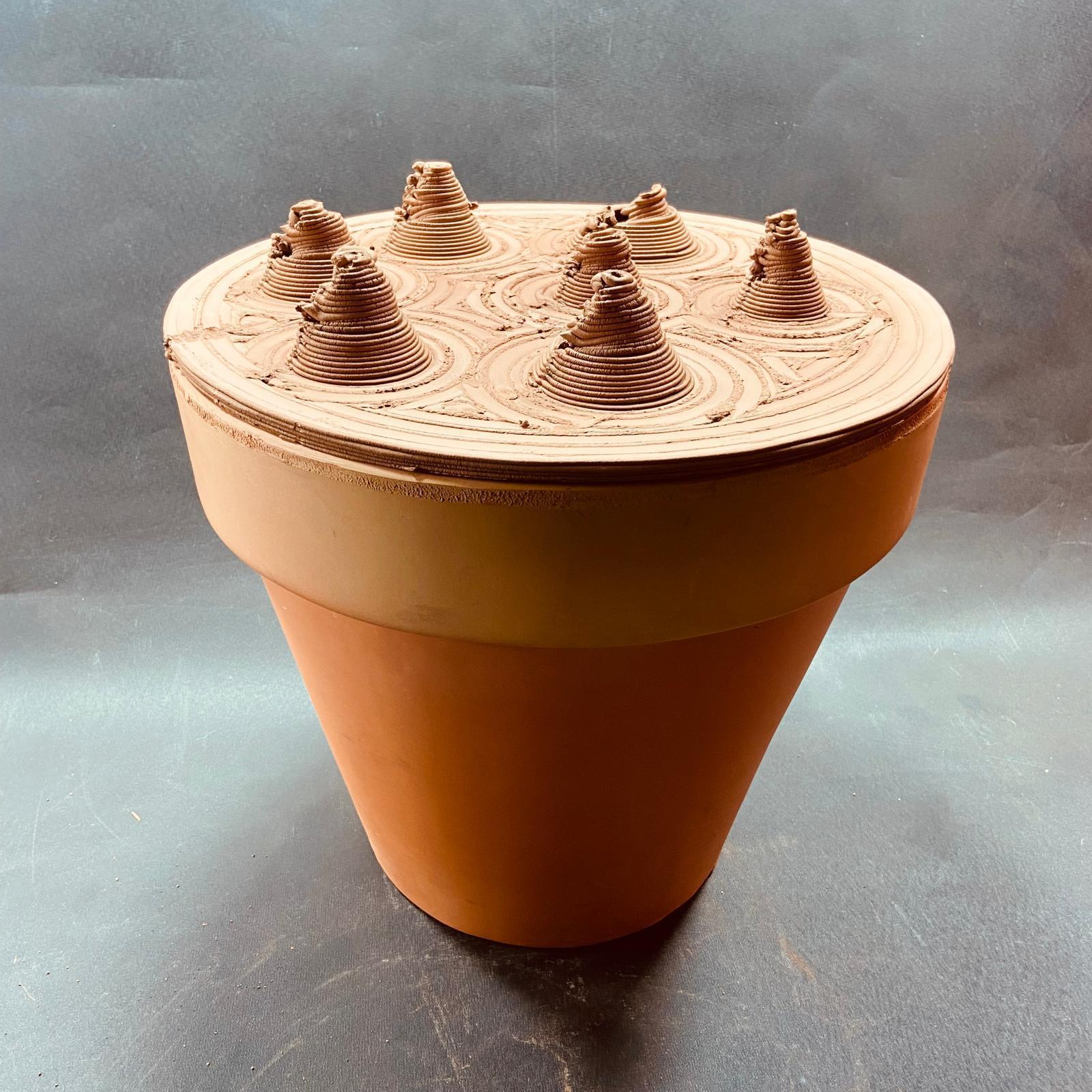
8. Hackeo de macetas / Hacking pots
Nos gustaría comenzar preguntándonos si antes de usar o comprar algo pensamos: ¿De qué estará hecho? ¿Qué impacto habrá generado su fabricación? ¿Cuánta energía habrá necesitado para llegar aquí?...
Este run-run en la cabeza, nos ha acompañando continuamente en el proyecto, impulsándonos a pensar cómo podríamos construir nuestro huerto con materiales locales y técnicas accesibles que no generarán más daño al mundo.
Es por ello que estamos intentando crear nuevos vínculos entre los materiales que tenemos a disposición como el agua de los aires acondicionados, la arcilla típica del valle del Guadalquivir, el humus de lombriz o las semillas de los huertos urbanos.
También estamos intentando aprovechar las nuevas técnicas de impresión 3D para combinar inteligentemente estos materiales en la fabricación de los objetos necesarios para nuestro huerto.
Pero a veces también nos preguntamos qué necesidad hay de crear todo desde cero y si acaso no es más inteligente utilizar objetos que ya existen y complementarlos con nuevas piezas impresas que permitan amplificar su función.
¿Podríamos utilizar las tradicionales macetas de barro de 15 litros que estamos usando en el jardín vertical?
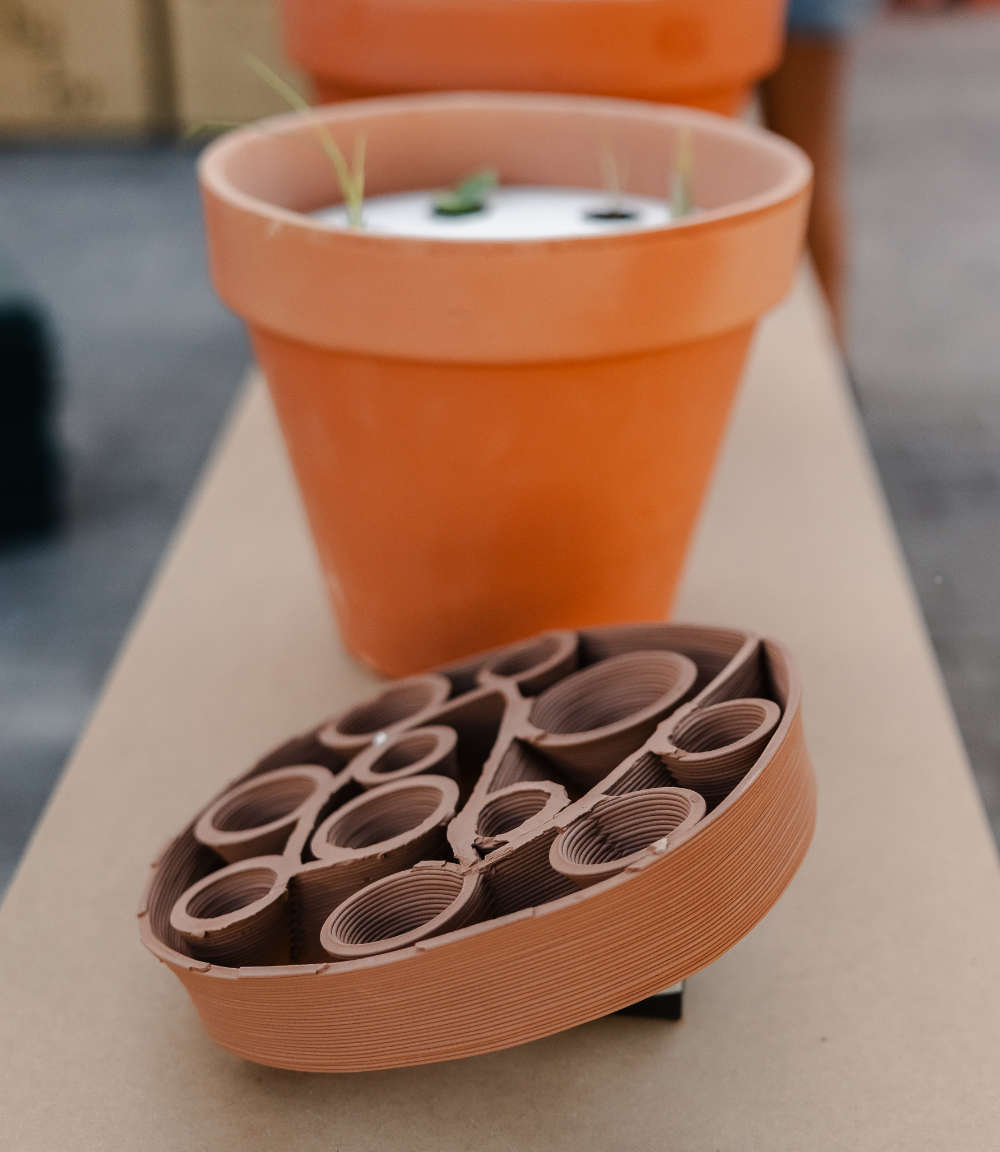
Claro que sí! Por ejemplo, podríamos hackearlas con una cubierta impresa en cerámica que capte el agua de los aires acondicionados y lo distribuya por la superficie de la maceta, refrigerando por evapotranspiración.
.jpeg)
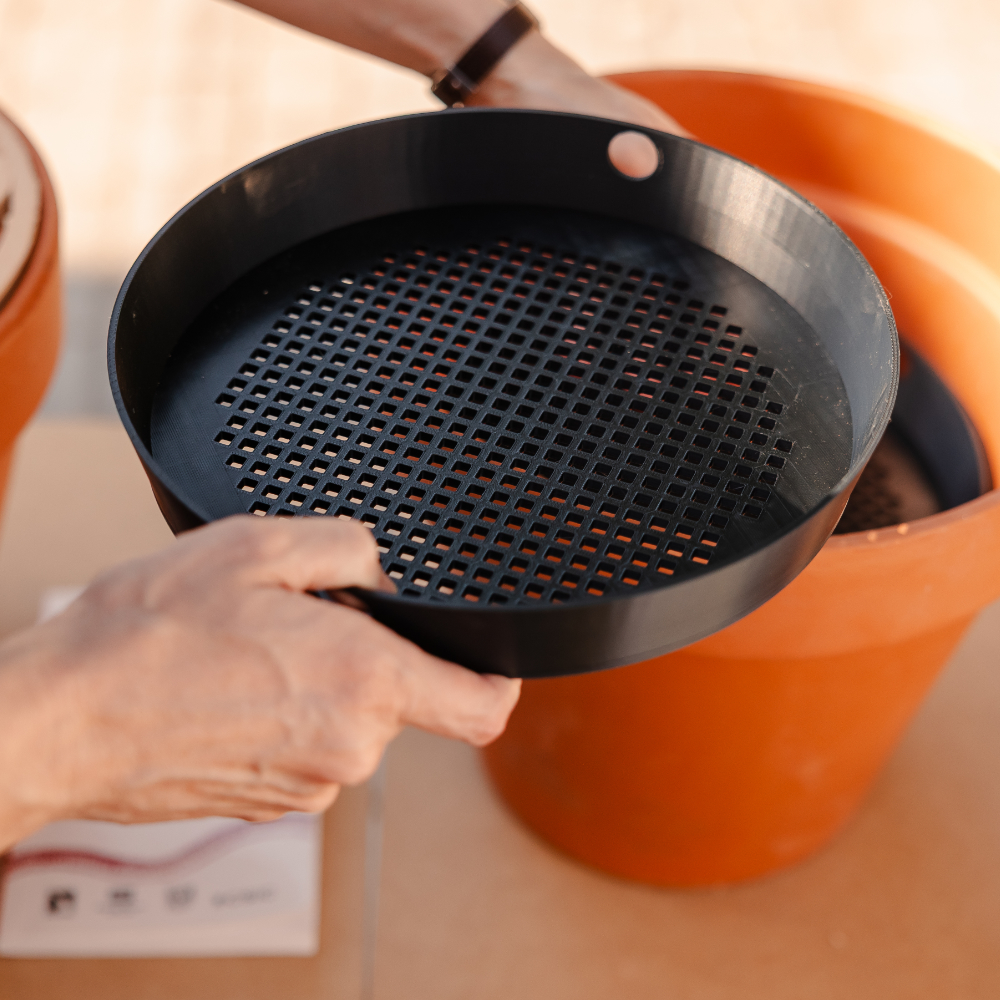
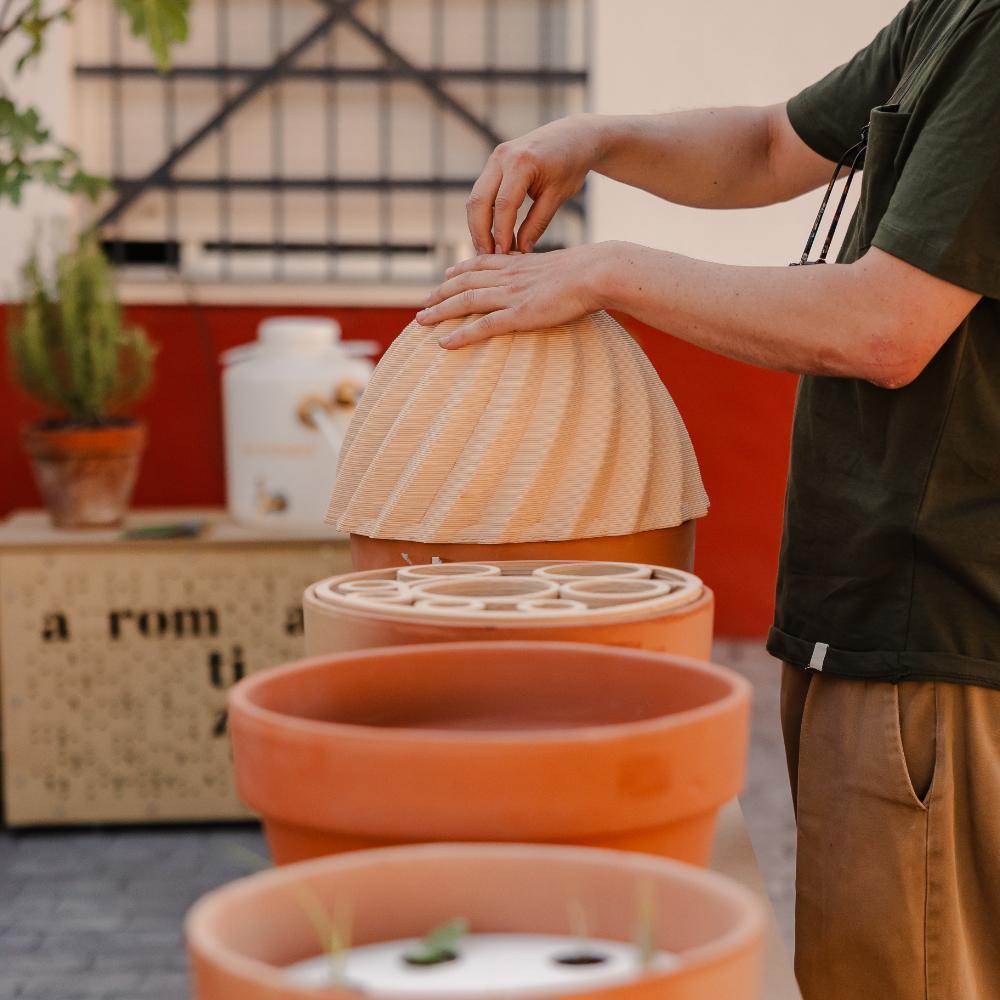
¡Una magnífica estrategia para utilizarla como vermicompostera y mantener a las lombrices frescas durante el verano!
También podríamos crear plantillas específicas de semillado, que nos ayudarán a distribuir especies diversas y el humus necesario en la maceta… ohhh! eso es una idea muy sabrosa. Incluso podríamos concebir las macetas como pequeños ecosistemas culinarios… pero de esto hablaremos en el próximo capítulo.
.jpg)
.jpeg)
***English version***
We would like to start by asking ourselves if before we use or buy something we think: What will it be made of? What impact will its manufacture have? How much energy did it take to get here?
This burr in our heads has been a constant companion in the project, pushing us to think about how we could build our garden with local materials and accessible techniques that will not generate more damage to the world.
That is why we are trying to create new links between the materials we have at our disposal such as water from air conditioners, clay typical of the Guadalquivir valley, worm humus or seeds from urban gardens.
And also why we are trying to take advantage of new 3D printing techniques to intelligently combine these materials in the manufacture of the objects needed for our garden.
But sometimes we also wonder why we need to create everything from scratch. Wouldn't it be smarter to use objects that already exist and complement them with new printed parts to amplify their function?
For example, could we use the traditional 15-litre clay pots that we are using in the vertical garden for other purposes?
Of course, we have already seen that we could hack them with a ceramic printed cover that captures the water from the air conditioners and distributes it over the surface of the pot, cooling it by evapotranspiration.
A great strategy to use it as a vermicompost and keep the worms cool during the summer!
But we could also create specific seedbeds or seedlings, which will help us to distribute various species and the necessary humus in the pot...
Ohhh! that's a very tasty idea. We could even conceive the pots as small culinary ecosystems...
I'm not following you
Follow us in the next chapter and we'll explain it to you...
 Powered by